
Afghanistan’s Taliban-run Ministry for the Propagation of Virtue, Prevention of Vice, Hajj and Religious Affairs has instructed Friday prayer imams across the country to tell worshippers that bridal makeup, women wearing perfume, exchanging wedding rings, music, and several other wedding customs are contrary to Islamic law.
The ministry distributed this week’s Friday sermon under the title “Avoiding Sinful Acts and Un-Islamic Customs in Wedding Ceremonies and Other Celebrations” to imams in Kabul and the provinces, instructing them to deliver its contents during Friday prayers.
According to the text, private meetings between an engaged couple before their Islamic marriage contract (nikah) are considered impermissible. The ministry states that engagement does not constitute marriage and that the couple remain non-mahram to each other until the marriage contract is concluded.
The ministry also described the exchange of wedding rings and applying henna to each other’s hands before marriage as contrary to Sharia, saying the couple should not touch each other before the nikah.
It further described the exchange of wedding rings as a tradition “derived from Christianity” and said Muslims should not imitate the customs of non-Muslims.
The ministry also declared bridal makeup in beauty salons to be against Islamic law. It argued that altering a bride’s natural appearance with cosmetics amounts to “deception and fraud,” stating that the groom’s family should see the bride’s natural appearance rather than one changed through makeup.
The sermon also declares the use of artificial hair, eyebrow shaping, tattooing, creating gaps between teeth for cosmetic purposes, lip enhancement, and the use of products that alter skin color to be impermissible.
The ministry further instructed that women should not wear perfume at weddings if its fragrance can be detected by unrelated men.
It also described singing, music, and dancing by both women and men as contrary to Sharia, adding that even playing recorded music during wedding ceremonies is not permissible.
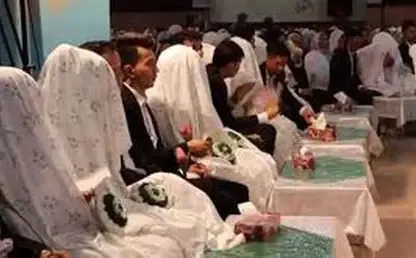
The ministry described seating the bride and groom together in front of guests as “the height of shamelessness and lack of honor.” It said the groom should remain among male guests, while the bride should stay behind a curtain with the women.
According to the sermon, bringing the bride into the men’s gathering and seating her beside the groom undermines a woman’s modesty and observance of hijab.
The Taliban say their policies and directives are based on Islamic Sharia and the Hanafi school of jurisprudence.
Since returning to power in August 2021, the group has enforced its interpretation of Islamic law in areas including education, employment, women’s dress, and women’s participation in public life.
The Organization of Islamic Cooperation (OIC) has previously stated that the Taliban’s policies toward women risk reinforcing inaccurate perceptions of Islam.